
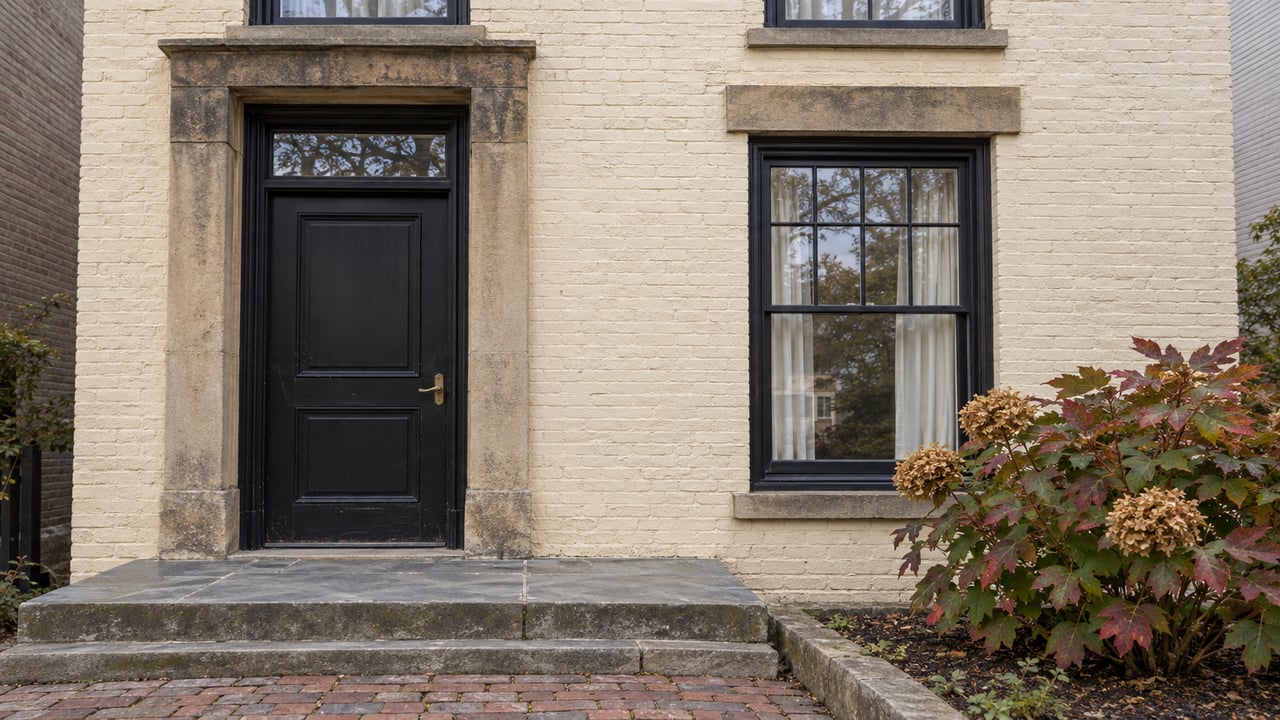
On November 18, 2025, the City of Newburgh Planning Board approved a site plan and special use permit for a three-family property on two conditions. Drop-off and pick-up parking had to be on Grand Street, and the owner had to correct the property's rental license within 30 days. The license on file showed no owner occupancy, but the owner lived on the first floor. The approval had nothing to do with a sale. It does show that the city reads these records, and that a mismatch between the paperwork and the building can hold up something unrelated.
For anyone selling a pre-1980 two-, three- or four-family house in the city, that is the right frame. Two compliance records are tied to these buildings now. Neither one passes to the buyer. A buyer of an older Newburgh multifamily is paying for the likelihood that the building will pass both reviews again, on the buyer's own timeline, starting the day the deed records.
The City's rental license comes from Chapter 240, Article I of the City Code, adopted January 22, 2024. It replaced an article from 2017. The second record comes from the New York State Lead Rental Registry. The registry took effect November 3, 2025 in 25 communities of concern, and Newburgh is one of them. Final regulations were published April 8, 2026.
| City of Newburgh rental license | NYS Lead Rental Registry | |
|---|---|---|
| What it covers | Buildings with a rented dwelling or rooming unit that are not owner-occupied | Residential buildings built before 1980 with two or more units, every unit included regardless of occupancy |
| Transfers on sale | No | No |
| New owner's deadline | Apply within 30 days of taking ownership | Register the ownership change within 30 days |
| What approval requires | A finding of code compliance, based on a City inspection or a licensed engineer's certification | A satisfactory lead hazard inspection and dust-wipe results, at least once every three years |
| Renewal | Annual | Lead Safety Certificate at least every three years |
The seller also has a duty on the city side. The rental-license article requires the seller to notify the Municipal Officer in writing within 10 business days of transferring control of the property.
The City does not require a new certificate of occupancy just because a privately owned home changes hands. Under Chapter 122, a CO is triggered by new construction, work that needs a building permit, or a change in use or occupancy. That leaves the two rental records as the compliance checkpoints that come with the sale itself.
The 30-day deadlines cover paperwork. What follows them is a review of the building. On the city side, a license is not issued until the Municipal Officer finds the property code-compliant. That finding is based on an inspection. If the owner does not consent to one, a licensed professional engineer can certify compliance instead. An application that is still incomplete after 120 days is canceled, and the owner has to start over with a new fee. Renting a unit without a valid license is unlawful. The penalty is 5% of the license fee for each day.
The fees are modest. The City's fee schedule lists rental-license fees per unit of $95 for buildings with one or two units and $80 for three to five. The money a buyer actually worries about is on the lead side. Lead inspections and dust-wipe sampling are due by a date the health department sets, and at minimum once every three years.
The New York State lead regulations set the presumption. A lead hazard inspection covers every rental unit, all common areas inside and out, and the soil on the property. For buildings built before 1980, painted surfaces are presumed to contain lead, and any deteriorated paint is cited as a hazard. Bare soil that tenants can reach is classified as a visual lead soil hazard. The fix is to cover it with a durable material. If hazards are found, dust-wipe samples are taken after the remediation and cleaning. A unit that fails more than one round of clearance sampling has its windows and other friction surfaces checked for rubbing or binding.
So in a building of this age, peeling trim and a worn side yard count against compliance. A buyer's contractor will price them as required work that has to be done before a certificate can be issued. The person doing the inspection also has to be independent of whoever does the remediation. A third-party inspector has to be certified by the EPA as a Lead Risk Assessor. In its regulatory impact statement, the state estimated third-party inspection costs at $250 to $450 per unit. That is a statewide estimate, not a county fee.
The season matters a little. Soil hazards are not cited when snow covers the ground, and the Lead Safety Certificate notes that condition. A winter inspection still checks every painted surface.
This affects estate and trust sales in particular. Many older two-families in the city were owner-occupied for decades, with a parent in one unit and a tenant in the other. Both records are built around that arrangement, and the arrangement can end before the house is ever listed.
The City's rental-license article exempts an owner-occupied property with up to two rental units from the fee, though the owner still has to apply. The definition of "owner-occupied dwelling" specifically excludes buildings owned by an LLC, partnership or corporation, and buildings held by a receiver, executor, trustee or agent. Read together, these provisions suggest that once an executor controls a two-family, the city may no longer treat it as owner-occupied. Confirm the property's status with the Bureau of Code Compliance and the estate's attorney before assuming either way.
The state registry has a matching definition. Its "owner" includes an executor, trustee, receiver and agent. Form DOH-5842 lets a unit occupied as the primary residence of the owner or immediate family skip inspection and certification, but only after the health department approves the attestation and the proof of occupancy. The exemption lasts three years or ends sooner if the owner or family member stops living in the unit. Neither the form nor the regulations describe a separate process for when the owner-occupant dies. Under the general rule, the exemption depends on someone in the family continuing to live there.
A third city chapter applies to some estate houses. Chapter 121 does not count a habitable, maintained property that is actively marketed for sale or rent as vacant. A building that cannot be used without repair or rehabilitation can qualify. A qualifying vacant building has to be registered within 30 days after it becomes vacant or after the owner takes title, whichever comes later. The initial fee is $250 and goes up at each renewal. Registration also requires insurance and a cash bond of at least $10,000. A qualifying restoration plan can get a waiver. For a renovation-ready estate property, moving quickly to keep the house maintained and on the market affects which rules apply.
Orange County's Department of Health runs the registry locally. On April 21, 2026, Deputy Commissioner Lisa Lahiff told a county legislative committee that more than 1,000 properties had registered, about 25% of those required. She said the county was building its list from the existing rental registries in Newburgh and Middletown, sending mailings, and issuing notices of demand to owners who had not registered. That 25% is a countywide figure, not a count for the city alone. The state's deadline for existing owners was May 1, 2026. At the committee's August 18, 2026 meeting, the county said it was still registering properties in Middletown and Newburgh.
Many older Newburgh buildings may therefore reach the market this fall with registration status that is unclear or unconfirmed. The New York State Department of Health warns that failing to register, have a property inspected, fix identified hazards, or obtain a timely Lead Safety Certificate can lead to penalties and fines under Public Health Law. It also tells owners to wait for instructions from their local health department before scheduling a lead hazard inspection. A seller who can show a confirmed registration and a clear paint record is giving the buyer's attorney less to worry about.
There is one funding source to know about, with a limit. RUPCO administers the state's Leading in Lead Prevention Program in the City of Newburgh. It offers up to $40,000 per unit for qualifying pre-1980 buildings with two or more units. The program is currently open only to households identified through the NYS Department of Health's Childhood Lead Poisoning Primary Prevention Program.
Order matters here, because each step affects how the next one is priced.
For an estate, take one more step first. Settle with counsel how the executor's control affects owner-occupied status on both records.
No. The state rule applies to buildings built before 1980 with two or more units.
No. Every unit in an eligible building has to be registered, whatever its occupancy. The DOH-5842 attestation can exempt only the unit the owner or immediate family occupies, and only after the health department approves it.
Under the rental-license article, an owner who does not consent to an inspection can submit a licensed professional engineer's certification on the City's form instead. A Municipal Officer then reviews it.
None of this is legal advice. Confirm the current requirements with the Bureau of Code Compliance, Orange County DOH, and your attorney.
Before an older Newburgh multifamily goes on the market, Kathryn Decrosta can help you confirm both registrations, schedule the paint and soil work with qualified vendors, and put together a compliance file a buyer's attorney can review in one sitting. Call or text to connect.
Selling is equal parts strategy and Execution - And I lead Both with precision. From positioning to negotiation, every detail is managed to deliver a refined process and a strong return.

KATHRYN DECROSTA
5031 US-9W Newburgh, NY 12550