
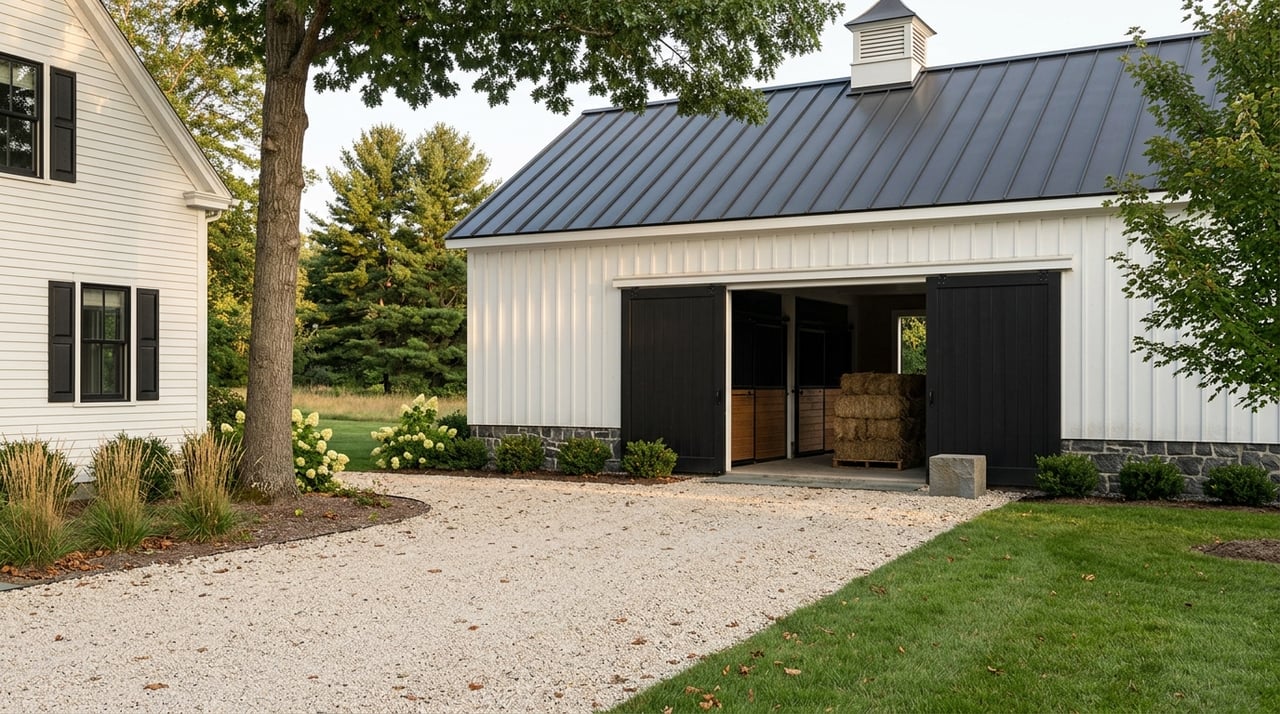
If you are selling a rural or equestrian property in Wallkill, you already know this is not a standard home sale. Buyers are not only looking at the house. They are studying the land, the outbuildings, the access, and whether the property truly supports the use they have in mind. When your pricing, preparation, and marketing reflect those details clearly, you put yourself in a much stronger position. Let’s dive in.
In this case, Wallkill refers to the hamlet of Wallkill in the Town of Shawangunk in Ulster County. Local planning documents describe the area as shaped by the Wallkill River and the former rail corridor that is now the Wallkill Valley Rail Trail. They also note a pattern of larger parcels along the river and trail, with smaller lot development closer to the hamlet core.
That setting creates a different kind of buyer interest. Some buyers are focused on horses, barns, and turnout space. Others are drawn to productive land, privacy, or outdoor access. Many want a combination of lifestyle appeal and practical land use, which means your listing has to answer more questions than a typical suburban property would.
Ulster County adds another layer to the story. Much of the Wallkill River Valley falls within Agricultural District #2, an area the county describes as home to a wide range of agricultural uses, including horse farms, orchards, vineyards, nurseries, livestock, and greenhouses. The county also highlights the valley’s strong soils, which can shape how buyers think about the land’s long-term utility.
When a buyer tours a rural or horse property, acreage alone is rarely enough. They want to know how much of that land is actually usable. A parcel may sound impressive on paper, but if the layout, drainage, fencing, or access do not support the intended use, buyers will notice quickly.
In Wallkill, buyers often focus on a few practical questions:
This is why two properties with similar acreage can perform very differently. A modest home on well-organized land with functional fencing, good circulation, and clearly documented improvements may compete better than a larger house with acreage that is hard to use.
One of the biggest mistakes sellers make is assuming that existing use automatically equals legal use. In the Town of Shawangunk, zoning rules are district-specific, and livestock-related rules can directly affect how a property should be marketed.
For example, the town’s codified zoning law includes standards stating that on some parcels under 10 acres, horses and cows are limited to one animal per acre. It also states that commercial livestock is allowed on 10 acres or more. Farm buildings housing animals must be set back 200 feet from property lines, while accessory farm buildings without animals must be set back 50 feet.
Those details matter because buyers will ask direct questions. They may want to know whether horses are allowed, whether a barn is legal, whether the paddocks comply, or whether a current setup is permitted as-is. If your listing is vague, or if it overstates what the property can support, you risk creating confusion that can slow the sale or weaken your negotiations.
If your property is located within agricultural district land, that can be meaningful. New York’s Agricultural Districts Law offers protections against local laws that unreasonably restrict farm operations, and the state can review those laws under Section 305-a.
At the same time, agricultural district status does not replace local zoning review. That is an important distinction for sellers. It may be a useful part of the property story, but it should not be presented as a blanket approval for every use a buyer may imagine.
This is where precise marketing matters. It is smart to note district status when relevant, but the safest approach is to pair that information with clear documentation and parcel-specific facts. Buyers appreciate confidence, but they trust clarity even more.
For some rural and equestrian buyers, carrying costs are part of the decision. New York offers agricultural tax benefits that can affect how a property is viewed.
According to the state, newly constructed or reconstructed agricultural structures may qualify for a 10-year property tax exemption. The state also notes that agricultural assessments can limit the assessed value of qualifying farmland to its agricultural production value rather than full development value.
If your property currently benefits from agricultural tax treatment, that can be a useful point in pricing and buyer conversations. It should be presented carefully and factually, with documentation available where appropriate. It is not just about price. It is about helping buyers understand the full ownership picture.
Barns, run-in sheds, tack rooms, hay storage, workshops, and fenced paddocks often play a major role in how buyers value a property. But in this market, an outbuilding only adds real strength when it is both functional and documented.
A clean, well-maintained barn with a sensible layout can be a strong selling feature. The same is true for organized storage, usable gates, working water access, and practical circulation for animals or equipment. On the other hand, deteriorated buildings, unclear permitting history, or structures that appear poorly sited can become negotiation points.
Before listing, it helps to create a simple inventory of what is actually there. That may include:
That kind of preparation supports stronger marketing and fewer surprises once buyers begin asking questions.
Rural and equestrian properties are visual, but not in the same way as a traditional house listing. The goal is not only to make the home look appealing. The goal is to help buyers understand how the entire property works.
In Wallkill, that usually means showing the land from multiple perspectives. Aerial photography can help illustrate field layout, fence lines, barn placement, driveway access, and how the parcel relates to neighboring open land, the river corridor, or the rail trail area. Wide exterior shots also help buyers visualize the overall setup before they visit.
Each structure should be photographed and identified by function. Buyers want to know what they are seeing, whether it is a barn, workshop, tack room, equipment shed, or hay storage building. Clear labels and accurate descriptions make the listing feel more credible and easier to evaluate.
Wallkill has real lifestyle appeal, but this part of the marketing should stay grounded in facts. The Wallkill Valley Rail Trail is a 22-plus-mile linear park in Ulster County that is used year-round from dawn to dusk. It is used by hikers, joggers, cyclists, horseback riders, and cross-country skiers, and it receives more than 100,000 visitors annually.
That can absolutely matter to a buyer. The trail also connects into a broader recreational network that includes the River-to-Ridge Trail, the Shawangunk Ridge, Mohonk Preserve, and Minnewaska State Park Preserve. Local planning documents also describe the Wallkill River as a scenic and recreational resource used for activities like fishing and paddle boating.
Still, the strongest listing language is precise. If a property has direct trail access, say that only if it is true and usable from the parcel. If it is adjacent to the trail, say adjacent. If the trail is simply nearby, say nearby. That level of accuracy protects you and helps serious buyers make informed decisions.
The best results usually start before the listing goes live. With a niche property, thoughtful preparation often has a direct impact on price, terms, and buyer confidence.
A smart pre-list strategy may include:
This kind of work aligns with how distinctive properties are sold best. Strong outcomes are usually built through preparation, not left to chance once the listing is already live.
Selling a rural or equestrian property in Wallkill often requires more hands-on strategy than a standard residential listing. You are not just marketing bedrooms and baths. You are presenting a complete property story that includes land utility, legal use, improvements, and lifestyle access.
That is where a seller-focused process can make a real difference. Careful pricing, polished media, organized documentation, and thoughtful positioning help your property speak clearly to the right buyer. In a market where details can shape value so directly, that clarity is a competitive advantage.
If you are preparing to sell and want a more strategic plan for pricing, presentation, and launch, connect with Kathryn DeCrosta. Her approach is built around intentional preparation, elevated marketing, and steady guidance from pre-listing through closing.
Selling is equal parts strategy and Execution - And I lead Both with precision. From positioning to negotiation, every detail is managed to deliver a refined process and a strong return.

KATHRYN DECROSTA
5031 US-9W Newburgh, NY 12550